
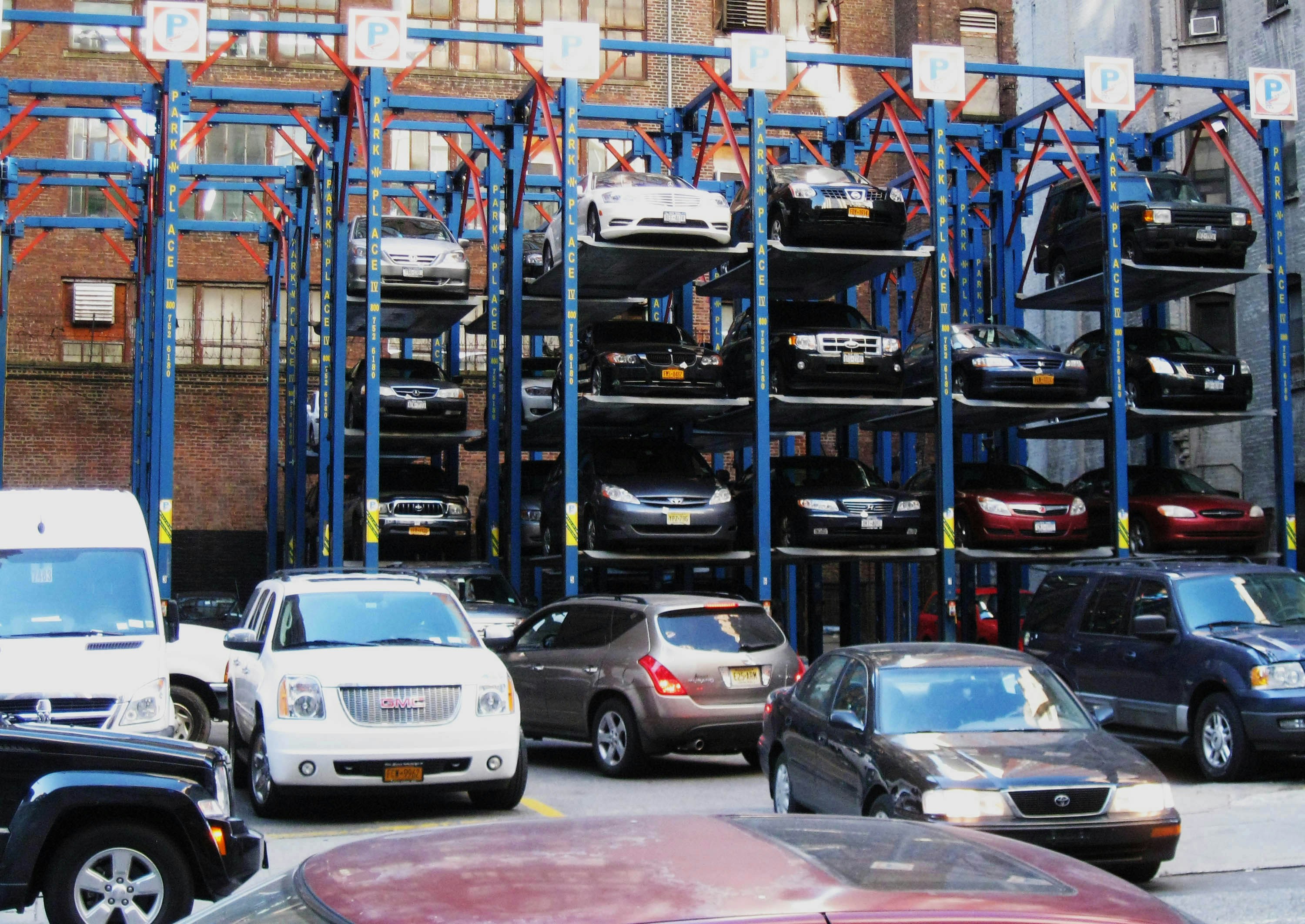
What Are Cantilever Stackers?
Cantilever stackers for elevated parking represent a modern approach to optimizing space in urban environments. They are designed to lift and store vehicles in a manner that minimizes the footprint required for parking. The primary feature of cantilever stackers is their unique construction, which utilizes cantilever beams to support the weight of vehicles without the need for vertical columns. This design allows for greater flexibility in vehicle placement and maximizes usable space.
The functionality of cantilever stackers is notably efficient. When a vehicle is parked, it is driven onto a platform that is then elevated by hydraulic or mechanical systems. This elevated system allows for multiple layers of vehicles to be stacked above one another, effectively doubling or tripling the parking capacity of standard lots. As a result, cantilever stackers for elevated parking not only save space but also facilitate easier access and vehicle retrieval. They can often accommodate a variety of vehicle sizes, ranging from compact cars to larger SUVs, making them versatile solutions for both commercial and residential applications.
Key components of cantilever stackers include the platform, cantilever arms, hydraulic pistons or motors, and an integrated control system. The platform is where vehicles are parked, while the cantilever arms provide additional support for the weight above. The hydraulic system is crucial for the elevation and descent of the platform, ensuring smooth operation. The control mechanism typically includes user-friendly interfaces that simplify vehicle parking and retrieval processes. Unlike traditional parking methods, where spaces are dedicated to each vehicle, the cantilever system allows for much more efficient use of limited space. Overall, cantilever stackers for elevated parking offer an innovative and effective solution to urban parking challenges, making them a popular choice for future developments.
Advantages of Using Cantilever Stackers in Elevated Parking
Cantilever stackers for elevated parking offer a multitude of advantages that significantly enhance the efficiency and functionality of parking structures. One of the primary benefits is their ability to optimize space usage. These systems maximize vertical parking capacity, allowing for more vehicles to be stored within a given footprint. This feature is particularly beneficial in urban environments where land is at a premium and space constraints are common.
Furthermore, cantilever stackers contribute to improved traffic flow in parking facilities. By utilizing a multilevel design, vehicles can be parked and retrieved without the need for extensive maneuvering, reducing congestion and wait times. This streamline process ensures that drivers can access their vehicles with greater ease and efficiency. The reduction in traffic bottlenecks not only enhances user satisfaction but also reduces the potential for accidents within the facility.
Safety is another critical aspect of cantilever stackers for elevated parking. These structures are designed with stability in mind, minimizing the risk of tipping or structural failure. Moreover, with defined pathways and automated systems, the likelihood of pedestrian and vehicle collisions can be significantly decreased, providing a safer environment for all users. The integration of safety features such as reinforced barriers and clear signage further enhances the overall security of elevated parking solutions.
From an economic standpoint, cantilever stackers present a cost-effective solution for parking management. Their efficient design allows for lower operational costs compared to traditional parking structures, reducing the need for extensive maintenance and staffing. Additionally, their versatility enables implementation in various settings, from commercial complexes to residential buildings, making them an attractive option for optimizing parking capacities across different environments.
Installation and Maintenance Considerations for Cantilever Stackers
When installing cantilever stackers for elevated parking, several key factors must be taken into account to ensure optimal performance and safety. Firstly, space requirements are critical; the design and layout of the parking facility must accommodate the dimensions of the stackers while allowing sufficient maneuvering room for vehicles. Careful planning in the configuration can maximize parking density without compromising accessibility.
Load capacities are another essential consideration. Each cantilever stacker is designed to handle specific weight limits, and exceeding these can result in structural failure and pose serious safety risks. It is imperative to assess the types of vehicles that will be parked and ensure that the stackers are rated appropriately for these loads. This involves reviewing the manufacturer’s specifications and possibly consulting with a structural engineer to confirm that the system can support the anticipated usage.
Compliance with safety regulations is paramount when it comes to cantilever stackers for elevated parking. Local regulations may dictate requirements for installation, inspections, and maintenance practices. Ensuring adherence to these regulations not only mitigates risk but also enhances the reliability of the parking system.
Maintenance practices are vital for guaranteeing the longevity and efficiency of cantilever stackers. Regular inspections should be conducted to identify wear and tear or any potential issues before they escalate. Additionally, scheduled maintenance routines, including lubrication of moving parts and checking for structural integrity, can significantly extend the life of the stackers. Keeping detailed logs of all maintenance work performed can also help in compliance with safety standards and facilitate timely repairs.
Overall, a thorough understanding of the aforementioned factors is crucial for the successful implementation of cantilever stackers in elevated parking facilities, promoting both safety and functionality.
Future Trends in Parking Solutions Featuring Cantilever Stackers
The landscape of urban parking is rapidly evolving, driven by advancements in technology and the growing demand for efficiency and space optimization. One of the most prominent solutions emerging in this context is the utilization of cantilever stackers for elevated parking. These systems are designed to maximize vertical space, thereby addressing the challenge of limited ground-level parking in dense urban environments.
Looking ahead, we anticipate several key trends that will influence the future of cantilever stacker design and functionality. Chief among these is the integration of electric vehicle (EV) technology. As the number of electric vehicles increases, the compatibility of cantilever stackers with EVs will become essential. Future iterations of these systems may incorporate charging stations within the stacks, allowing for seamless parking and battery management, thereby enhancing convenience for EV owners.
Moreover, smart technology will likely play a significant role in the next generation of cantilever stackers for elevated parking. Innovations such as IoT connectivity and mobile applications could enable real-time monitoring and control of parking spaces. Users might be able to reserve parking slots in advance, track the availability of spaces, and receive notifications when their vehicle is ready, thus streamlining the overall parking experience.
Furthermore, advancements in materials and construction techniques could lead to more robust and sustainable designs. The use of lightweight, high-strength materials will not only reduce the structural footprint required but also improve the overall energy efficiency of cantilever stackers. Additionally, sustainable practices in design and implementation will likely be prioritized in future developments, aligning with global efforts towards greener urban development.
As we contemplate these advancements, it is clear that cantilever stackers for elevated parking will not only redefine parking infrastructure but also adapt to encompass emerging transportation modalities and user needs. Understanding these future trends will be crucial for stakeholders aiming to leverage the benefits of innovative parking solutions in urban planning.